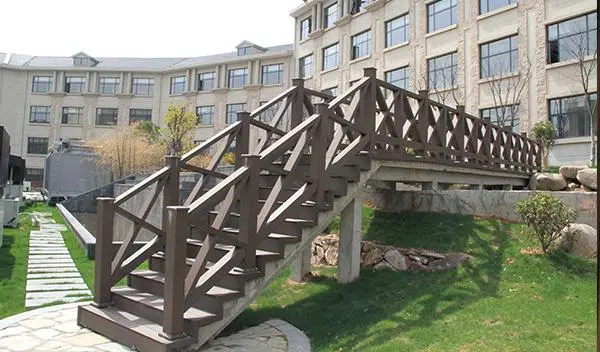
Outdoor stairs put more stress on a surface than many people realise. Unlike a flat deck, each step takes repeated point loads near the edge, while the whole structure is exposed to rain, heat, dust, leaves, and seasonal temperature changes. That is why the performance of WPC stairs depends as much on the way they are designed and installed as on the board itself.
In practice, most stair problems do not come from one single cause. A tread may begin to move because the support below it is too widely spaced. Water may sit around a riser because there is nowhere for it to drain. A board fitted too tightly between two fixed points may start to push against the surrounding structure as temperatures rise. These are installation and detailing issues rather than simple material faults.
For contractors, landscape designers, distributors, and project owners, the best approach is to treat the stair as a complete system. The substructure, drainage, fixing method, board movement, surface texture, and exposure conditions all need to work together. The sections below focus on the details that have the biggest influence on the long-term performance of WPC stair treads.
The first thing to get right is the support below the tread. WPC boards are generally used as the finished walking surface rather than as the main structural component, so they rely on the frame beneath them for stability.
One common mistake is to use the same support spacing as a nearby deck without considering how a stair is actually loaded. On a staircase, users repeatedly step close to the front edge. This puts more concentrated pressure on the tread and especially on the nosing area. If there is too much unsupported material at the front, the board can feel springy underfoot and may gradually place more stress on the fixings.
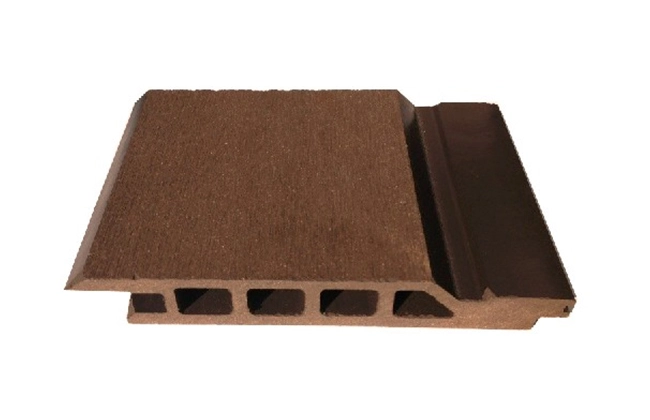
The correct layout depends on the board profile, its internal structure, tread depth, expected foot traffic, and the material used for the frame. A solid profile and a hollow profile, for example, should not automatically be treated in the same way.
The frame itself also needs to remain straight and rigid. Steel, aluminium, concrete, treated timber, or other suitable materials may be used depending on the project, but whatever is chosen should be appropriate for outdoor exposure and compatible with the fasteners used to secure the tread.
Before the stair dimensions are finalised, it is worth checking how the chosen profile fits the intended support layout. Different WPC decking and outdoor profiles can have different construction and installation requirements, so selecting the board and designing the frame should ideally happen together rather than as two separate decisions.
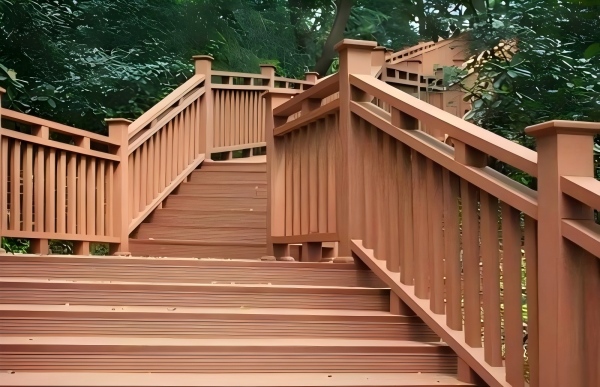
WPC is well suited to outdoor environments, but that does not mean water management can be ignored. The surface itself may tolerate moisture well, while the hidden parts of the stair assembly can still suffer if water and debris are allowed to collect.
The main goal is simple: water should have somewhere to go. It should be able to leave the tread surface, pass away from the substructure, and avoid becoming trapped around walls, risers, landings, or closed corners.
This matters even more in areas where leaves, soil, or organic debris tend to collect. A shaded garden stair, for example, may stay damp much longer than an exposed terrace. Poolside stairs also need careful detailing because splash water can repeatedly wet the same areas even when it has not rained.
Drainage is not only a durability issue. It also affects how the surface feels underfoot. Water mixed with dust, algae, mud, or leaves can reduce traction, even on a textured board. A tread that drains quickly and is easy to clean will generally perform more consistently in wet conditions.
Where possible, the stair design should avoid enclosed pockets below the boards and allow air to circulate around the structure. Good ventilation helps wet areas dry more evenly and makes the whole assembly easier to inspect and maintain.
Outdoor WPC moves as temperatures change. This is normal material behaviour, but it needs to be allowed for during installation.
The amount of movement is not the same in every project. Board length, profile design, material composition, installation temperature, fixing method, and local climate all play a part. That is why a universal gap should not be applied to every set of WPC stairs.
The risk is usually greater when boards are fitted tightly between fixed objects. A tread installed hard against a wall, post, side panel, or riser has very little room to move. When the temperature rises, the board can begin to press against those fixed elements. Over time, that pressure may show up as distorted joints, raised edges, stressed fasteners, or a change in alignment.
The same issue can appear on wider staircases where several tread pieces meet across one step. Joints should look neat, but they also need to allow the material to respond naturally to temperature changes.
This is why it is better to think about movement before the boards are cut. Joint positions, board lengths, fixing points, and nearby structures should all be planned together. Product-specific installation instructions should always take priority over a generic rule copied from another project.
A tread can have the right support and still perform poorly if the fixing method is wrong. Fasteners are the connection between the visible board and the structural frame, so they need to hold the tread securely without creating unnecessary stress.
For outdoor use, the fastener material should be suitable for prolonged exposure to moisture. This becomes especially important in coastal locations, around swimming pools, or in areas with high humidity, where corrosion can become a more serious long-term issue.
Over-tightening is another common problem. Tightening a fixing too aggressively can pull the board down unevenly or concentrate stress around the fixing point. At the other extreme, insufficient engagement can allow the tread to shift or make noise under repeated foot traffic.
Edge distance also matters. A screw placed too close to the end of a board may increase the chance of local damage, especially if the profile is not intended to be fixed in that position. Where pre-drilling is recommended, it should be treated as part of the installation method rather than as an optional extra.
Hidden fasteners can work well on compatible profiles and help maintain a clean surface. Around stair noses, edges, and other locations that need stronger restraint, direct mechanical fixing may be more suitable. There is no single best method for every set of WPC stair treads; the fastening system should match the profile and the stair detail.
| Design Area | Common Problem | Better Practice | Why It Matters |
|---|---|---|---|
| Substructure | Support spacing is copied from a deck without checking the tread profile | Match support spacing to the board construction and stair loading | Helps reduce flexing at the tread and nosing |
| Drainage | Water and debris collect below or around the stair | Provide drainage paths and ventilation around the assembly | Reduces trapped moisture and makes cleaning easier |
| Expansion | Boards are fitted tightly against fixed structures | Allow suitable movement around ends and joints | Reduces pressure, distortion, and joint movement |
| Fastening | Fasteners are over-tightened or positioned too close to an edge | Use suitable fixings and follow the profile's fixing requirements | Helps avoid local stress and unwanted movement |
| Surface Performance | Selection is based mainly on colour and appearance | Consider texture, wet use, drainage, and contamination | Provides more consistent performance underfoot |
| Maintenance | The stair is treated as maintenance-free | Inspect and clean the complete stair assembly periodically | Allows small issues to be found before they become larger problems |
Slip resistance deserves more attention on a staircase than on a level deck. A surface that feels acceptable when dry can behave very differently once rain, dirt, leaves, or organic growth are present.
Embossed, grooved, and brushed surfaces can improve texture, but the pattern alone does not determine how safe the tread will be. Surface condition matters just as much. A textured board covered with wet leaves or algae may offer less grip than a cleaner surface with a simpler finish.
This is particularly relevant for pool areas, shaded gardens, hospitality projects, and commercial spaces where the stairs are used throughout the day and in changing weather. The direction of grooves or embossing can also influence how water moves across the tread and how the surface feels underfoot.
For projects where slip resistance is a formal safety requirement, it is better to review available test information rather than rely on visual appearance. Local regulations, project specifications, and the expected use environment should all be considered before the surface is approved.
In other words, good WPC stair treads are not simply “non-slip” because they have texture. Their real performance depends on the combination of surface design, drainage, cleaning, installation, and site conditions.
One set of outdoor stairs can experience several different environments at the same time. The top steps may sit in full sunlight while the lower section remains shaded. One side may dry quickly after rain, while the other stays damp because of nearby planting or a wall.
These differences matter when thinking about ageing. UV exposure, heat, moisture, airborne dirt, and repeated foot traffic all affect how the surface looks over time. The right profile should therefore be chosen with the real exposure conditions in mind, not just from a colour sample viewed indoors.
Maintenance also needs to be realistic. WPC is often chosen because it requires less routine upkeep than many exterior timber systems, but it should not be treated as a material that never needs attention.
Leaves, dust, soil, food residue, and organic matter should be removed before they build up around joints and edges. It is also sensible to inspect the fasteners, stair noses, supporting structure, railings, and transitions to nearby surfaces from time to time.
This is especially important in commercial applications. A tread may still look perfectly serviceable while a fixing below it has started to loosen or a supporting member has shifted slightly. Looking at the entire stair assembly rather than only the visible board is a better way to catch these issues early.
For projects with unusual tread dimensions, high foot traffic, poolside exposure, coastal conditions, or specific surface requirements, it is useful to define those conditions before the profile is selected. Sharing the stair size, support material, climate, expected use, and finish requirements when discussing the project with Sundi WPC makes it easier to narrow down a suitable profile and installation approach.
The long-term performance of WPC stairs is usually decided before the first tread is installed. A stable frame, good drainage, enough room for material movement, correct fixings, suitable surface texture, and sensible maintenance all contribute to how well the staircase performs over time.
The material itself is only one part of the decision. Stair geometry, foot traffic, climate, exposure, support layout, and surrounding construction should all influence the final specification. When those factors are considered together, WPC stair treads can provide a practical and visually consistent solution for a wide range of outdoor projects.
Yes. WPC is commonly used outdoors because it performs well under moisture and weather exposure. Correct support, drainage, fastening, expansion allowance, and maintenance are still important for long-term performance.
Some decking profiles can be used as stair treads, but suitability depends on the board construction, support spacing, fixing method, tread depth, and nosing detail. The profile should be checked before installation.
Yes. WPC expands and contracts with temperature changes. The required allowance depends on the profile, board length, installation temperature, climate, and fixing system.
Wet performance varies with surface texture, drainage, dirt, algae, leaves, and footwear. A textured finish can help, but regular cleaning and good drainage are also important.
Rainwater should be able to leave the tread and surrounding structure without becoming trapped. Open drainage paths, ventilation, and regular removal of debris help keep the stair assembly dry and clean.
WPC generally requires relatively low maintenance, but occasional cleaning and inspection are still recommended. Check the treads, fixings, drainage areas, edges, railings, and supporting structure for any developing issues.