In shopping malls, hotels, office buildings, schools, hospitals, and transport hubs, railing for stairs indoors must withstand a level of daily stress that residential railing systems are never designed to handle — constant hand contact from hundreds or thousands of users every day, luggage and shopping bag impacts, cleaning routines that involve detergents and mechanical scrubbing, crowd pressure during peak hours, and years of continuous visual exposure to guests, customers, and building inspectors who form their first impression of the property's maintenance standards from the condition of the stair railing they touch on the way in. For commercial buyers, the right indoor stair railing is not simply a design choice or a safety compliance requirement — it is a lifecycle cost decision whose consequences accumulate over years in the form of maintenance labor, repair costs, refinishing downtime, guest complaints, and eventual replacement expenses that dwarf the original material cost difference between a durable and an inadequate railing system.
A WPC stair railing — made from wood-plastic composite material that combines wood-like warmth and appearance with composite durability — can help reduce the problems most commonly seen with the two traditional alternatives: metal railings that show fingerprints, may corrode in humid indoor environments, and require periodic coating or polishing to maintain their appearance, and wood railings that suffer surface wear, cracking, splintering, and regular repainting demands that create ongoing maintenance costs and operational disruptions in busy commercial spaces.
This guide covers the complete picture of why high-traffic commercial spaces need better railing durability, what a WPC stair railing system is and how it functions as a complete commercial railing solution, how WPC handles the scratch, impact, and cleaning chemical exposure that commercial stairs create, how WPC compares with metal and wood railing for long-term ROI, and what procurement and maintenance practices protect the investment in commercial indoor stair railing through the building's service life.
Let's starts with an honest assessment of the specific durability demands that high-traffic commercial environments create — and why each demand creates maintenance costs, operational disruptions, and guest experience consequences that standard residential-grade railing materials are not designed to handle.
Continuous surface contact from high user volumes is the primary durability challenge that distinguishes commercial stair railing from residential applications. In a busy shopping mall or hotel, the same railing surface may be touched, gripped, leaned on, and impacted by thousands of users every day — creating cumulative surface wear, fingerprint accumulation, and impact damage that would take years to develop in a residential setting but becomes visible within months in a commercial environment. For property managers whose guests and customers form their impression of the building's maintenance standards from the condition of the surfaces they touch, visible railing wear is a guest experience problem as well as a maintenance cost.
Cleaning chemical exposure from commercial maintenance routines is the material compatibility challenge that most directly affects the long-term surface integrity of indoor stair railing in commercial buildings. Commercial cleaning teams clean high-traffic surfaces multiple times per day using detergents, disinfectants, and mechanical scrubbing tools that would be considered aggressive by residential standards — and railing materials that are not designed for this level of chemical and mechanical exposure will show surface degradation, coating damage, and appearance deterioration that requires refinishing or replacement far sooner than the building owner anticipated.
Impact damage from luggage, carts, and service equipment is one of the biggest challenges to the durability of commercial stair railings in hotels, airports, shopping malls, and transport hubs. Suitcases, shopping carts, cleaning machines, and delivery trolleys frequently collide with railings, causing dents, scratches, and structural weakening that compromise both safety and appearance.
Understanding what a WPC stair railing system is — and how its component architecture, material properties, and installation design work together as a complete commercial railing solution rather than simply a handrail profile — is essential for procurement teams evaluating railing specifications for high-traffic commercial indoor applications.
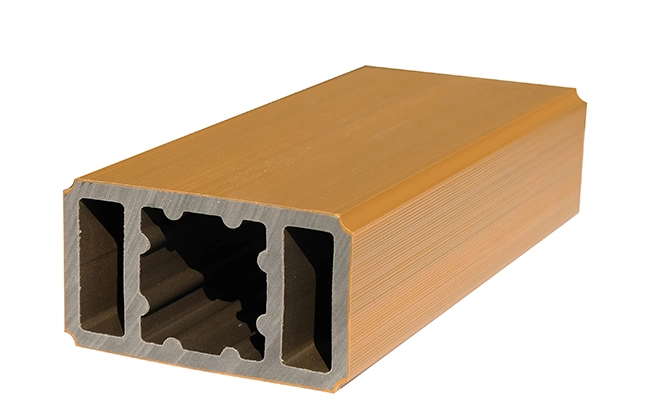
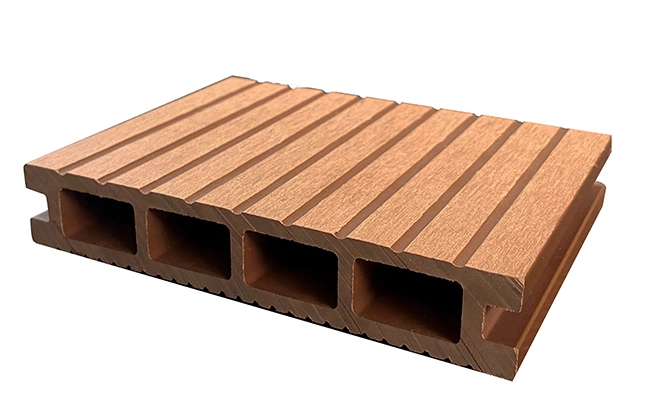
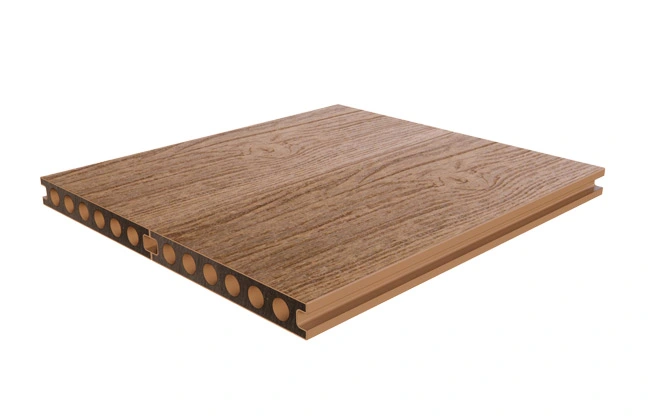
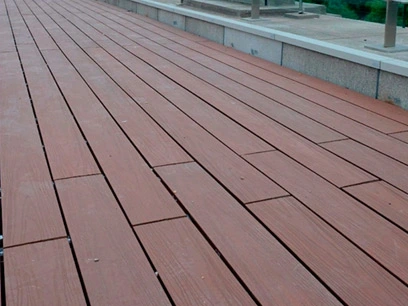
Railing for stairs indoors refers to a handrail, post, baluster, and support system installed along indoor staircases to provide safety, guidance, and visual continuity. A WPC stair railing is made from wood-plastic composite material — combining wood fibers and polymer materials to create a composite profile that offers wood-like warmth and appearance with composite durability that natural wood cannot match in commercial applications. Sundi describes WPC railings as products that can mimic the appearance of natural wood while offering multiple colors and finishes, with pre-fabricated components and easy-to-follow installation instructions for commercial project delivery.
| Component | Function | Commercial Buyer Evaluation Criterion |
|---|---|---|
| Handrail | Main grip surface | Comfort, scratch resistance, cleaning chemical resistance |
| Posts | Structural support | Fixing strength, post spacing, internal reinforcement |
| Balusters and infill | Safety barrier | Spacing compliance, stability, impact resistance |
| Connectors | Join profiles together | Installation accuracy and long-term connection tightness |
| Internal reinforcement | Improves structural stability | Critical for commercial traffic load requirements |
| Surface layer | Visual and tactile finish | Resistance to wear, stains, and cleaning marks |
| Fasteners | Secure the complete system | Corrosion resistance and load performance |
A WPC stair railing should be evaluated as a complete system — not just as a handrail profile. Commercial buyers should review material durability, post spacing, connector quality, cleaning compatibility, installation method, internal reinforcement design, and long-term maintenance cost together as an integrated performance specification.
The technical mechanism by which WPC composite material resists the scratch, impact, and cleaning chemical exposure that high-traffic commercial stairs create — and why this resistance translates into lower maintenance costs, better long-term appearance, and stronger lifecycle ROI than traditional wood and metal alternatives — is the core performance knowledge that procurement managers and property developers need to evaluate railing specifications for commercial indoor applications.
Commercial stair railings are exposed to scratch-creating contact from rings, watches, and keys on users' hands, luggage and shopping bags dragged along the railing, cleaning brushes and cloths used in daily maintenance routines, child strollers and mobility aids, and maintenance tools used during building service operations. A WPC stair railing's composite surface is not dependent on a paint or coating layer for its appearance — unlike wood railing where surface paint or stain is the primary visual protection, or metal railing where the coating determines the appearance quality. This means that surface contact that would chip paint from a wood railing or create visible scratches in a metal coating creates less visible damage on a WPC composite surface — helping maintain a more consistent appearance through the daily contact that commercial use creates.
For commercial stairs in hotels, malls, airports, and transport hubs, the railing system must withstand accidental impacts from suitcases, service carts, cleaning machines, delivery equipment, and crowd movement during peak periods. The structural performance of a WPC stair railing system under impact depends on the post spacing, internal reinforcement design, connector strength, and fastener specification — which is why Sundi's installation guidance recommends using internal galvanized square tubes for WPC railing columns, controlling the handrail span at approximately 1.5 meters and not exceeding 2 meters to avoid movement, and keeping small square post spacing within approximately 0.2 meters for structural stability.
Commercial interiors are cleaned frequently — sometimes multiple times per day — using detergents, disinfectants, and mechanical cleaning tools that create chemical and mechanical stress on railing surfaces. Sundi recommends regular cleaning of WPC railing with mild detergent and warm water, while avoiding harsh chemicals or bleach that may damage the composite material — providing the cleaning compatibility guidance that commercial facility management teams need to maintain WPC railing appearance without causing surface damage.
The systematic comparison of WPC stair railing, metal railing, and wood railing across the performance factors that determine long-term ROI in commercial indoor applications — and the lifecycle cost logic that allows procurement managers and property developers to justify WPC railing specification to finance teams and building owners — is the commercial knowledge that transforms a material selection decision into a strategic investment decision.
| Performance Factor | WPC Stair Railing | Metal Railing | Wood Railing |
|---|---|---|---|
| Scratch visibility | Moderate to low depending on finish | Can show scratches and fingerprints clearly | Surface wear and paint chipping become obvious |
| Corrosion and rust risk | Does not rust like metal | Can rust or corrode if coating fails in humid environments | No rust, but moisture can cause swelling and damage |
| Maintenance requirement | Mild soap and water cleaning | Polishing, coating, and rust treatment may be needed | Staining, sealing, painting, and repair may be needed |
| Appearance over time | Stable wood-like finish with color options | Modern but may show wear and fingerprints | Natural and premium but maintenance-heavy |
| Cleaning workload | Lower — simple routine cleaning | Medium — surface care required | Higher — surface treatment needed periodically |
| High-traffic suitability | Strong for low-maintenance commercial interiors | Strong structurally but surface care adds cost | Depends heavily on wood type and maintenance frequency |
| Long-term ROI | Strong when maintenance savings are factored in | Strong in some projects but corrosion and fingerprint care add cost | Higher lifecycle cost if frequent refinishing is required |
Sundi's WPC railing content directly compares WPC with wood and metal, noting that WPC requires minimal maintenance compared with wood, which may need staining, sealing, or painting, while metal may need painting or rust treatment — and that WPC railings generally need only occasional cleaning with soap and water.
For commercial properties, the correct ROI calculation is:
Total Lifecycle Cost = Material Cost + Installation Cost + Cleaning Cost + Repair Cost + Downtime Cost + Replacement Cost + Visual Aging Cost
A lower initial material price does not always mean lower total cost — and for commercial properties where maintenance labor is expensive, operational disruptions are costly, and guest experience is a revenue driver, the maintenance savings from WPC railing over wood and metal alternatives can deliver a payback period that justifies the material cost difference within the first two to three years of operation.
Procuring the right WPC for stairs for a specific commercial indoor application requires systematic pre-order confirmation of structural requirements, aesthetic specifications, installation conditions, and maintenance expectations — and a maintenance program that protects the railing's appearance and structural performance through the building's service life.
Before requesting a quotation for WPC stair railing, prepare and confirm the following:
Confirm the project type and location — shopping mall, hotel, office building, school, hospital, or transport hub — and verify that the selected railing system is appropriate for the specific traffic level and use pattern
Confirm the applicable building code and safety standard requirements — railing height, baluster spacing, load requirements, and fire safety specifications that the railing system must meet
Confirm the staircase dimensions and total linear meters required — and verify that the selected profile dimensions and post spacing are appropriate for the staircase geometry
Confirm whether internal metal reinforcement is required — for commercial traffic levels, internal galvanized square tube reinforcement in the posts is typically recommended for structural stability
Confirm the color and surface finish requirements — and verify that the selected color and finish are available in the required quantity with consistent batch-to-batch color matching for large commercial projects
Confirm the cleaning routine and chemical exposure — and verify that the selected railing material is compatible with the cleaning products and procedures used by the facility management team
Confirm the installation method and contractor capability — and verify that the installation team is familiar with WPC railing installation requirements including expansion gap allowance, post fixing method, and connector installation
Clean regularly with mild soap and warm water using a soft cloth, sponge, or soft-bristle brush — preventing the accumulation of dirt, grease, and organic debris that can affect surface appearance
Avoid harsh chemicals or bleach — aggressive cleaning chemicals can damage the composite surface and reduce its long-term appearance stability
Remove dust and debris from corners, joints, and post bases — preventing moisture accumulation in joints that can affect long-term structural performance
Inspect posts and connectors regularly — verifying that connections remain tight and that no movement or loosening has developed from the structural loading of commercial use
Train cleaning teams on approved cleaning methods — ensuring that commercial cleaning staff use the correct tools and products to maintain the railing without causing surface damage
Keep a maintenance log for commercial property management — documenting cleaning frequency, inspection findings, and any repair or replacement actions provides the maintenance record that building management and insurance requirements may need
In public space, the railing for stairs indoors is one of the most frequently touched, most visually prominent, and most maintenance-intensive building elements — and the material selection decision that determines whether it remains an asset that enhances the property's appearance and guest experience, or becomes a liability that generates maintenance costs, operational disruptions, and guest complaints for years after installation. A well-specified WPC stair railing system — with composite material that resists scratch, impact, and cleaning chemical exposure, wood-like appearance that enhances commercial interior design, and maintenance requirements that reduce the cleaning and refinishing workload that wood and metal alternatives create — is the commercial indoor railing investment that delivers the strongest lifecycle ROI for buyers who evaluate railing selection as a total cost of ownership decision rather than a unit price comparison.
Sundi provides WPC railing, co-extrusion railing, traditional railing, railing posts, WPC handrails, WPC balustrades, WPC decking, fencing, cladding, garden products, installation resources, documentation, factory support, and quality control resources for residential, commercial, and public-space projects.
Contact Sundi today to discuss your stair dimensions, traffic level, railing height, post spacing, color requirements, installation method, and bulk purchasing plan for WPC railing systems. Sundi can help evaluate the right WPC stair railing specification for your commercial indoor application and provide the product documentation, quality assurance, and supply reliability that professional commercial railing procurement requires.
Q1: What is the best railing for stairs indoors in high-traffic commercial spaces?
For high-traffic commercial spaces, the best railing for stairs indoors should combine structural durability, scratch and impact resistance, cleaning chemical compatibility, long-term appearance stability, and low maintenance requirements. WPC stair railing is a strong option for commercial applications because it offers wood-like warmth and appearance without the regular staining, sealing, and painting that wood requires, and without the fingerprint visibility and corrosion risk that metal railing creates in humid or high-cleaning-frequency environments.
Q2: Is WPC stair railing suitable for hotels and shopping malls?
Yes. WPC stair railing is suitable for hotels, shopping malls, offices, schools, hospitals, and other public commercial spaces because it is designed for durability, low maintenance, and stable appearance under the daily contact, cleaning, and impact exposure that high-traffic commercial environments create. Buyers should confirm local building code requirements, load specifications, post spacing requirements, and internal reinforcement needs before finalizing the specification for commercial applications.
Q3: How does WPC railing compare with metal railing for commercial indoor stairs?
Metal railing can provide strong structural performance and a modern aesthetic, but it may show fingerprints clearly on polished surfaces, may require periodic coating or polishing to maintain appearance, and can corrode or rust if the coating is damaged in humid indoor environments such as pool areas, spa facilities, or coastal hotels. WPC stair railing does not rust or corrode like metal and offers a warmer, wood-like appearance that suits hotel, mall, and hospitality interior design — with maintenance requirements limited to mild soap and water cleaning rather than the surface treatment that metal railing may need.
Q4: How does WPC railing compare with wood railing for long-term ROI?
Wood railing has a natural appearance and premium feel, but it requires regular staining, sealing, painting, or repair to maintain its appearance and structural integrity in commercial environments where moisture, cleaning chemicals, and heavy use accelerate surface degradation. WPC stair railing can mimic natural wood appearance while resisting rot, decay, splintering, warping, and cracking better than traditional wood — reducing the refinishing and repair costs that make wood railing a higher lifecycle cost option for commercial properties where maintenance labor is expensive and operational disruptions are costly.
Q5: How should WPC stair railing be cleaned and maintained in commercial buildings?
Use mild detergent with warm water and a soft cloth, sponge, or soft-bristle brush for regular cleaning. Avoid harsh chemicals or bleach that can damage the composite surface. Remove dust and debris from corners, joints, and post bases regularly. Inspect posts, connectors, and fasteners periodically for tightness and structural integrity. Train commercial cleaning teams on approved cleaning methods to ensure that daily maintenance preserves the railing's appearance without causing surface damage. Keep a maintenance log documenting cleaning frequency and inspection findings for building management records.